

07
2026
-
07
From Casting to Finished Machine – Why HAIDI‘s In‑House Foundry Delivers Superior Vertical Lathe Quality
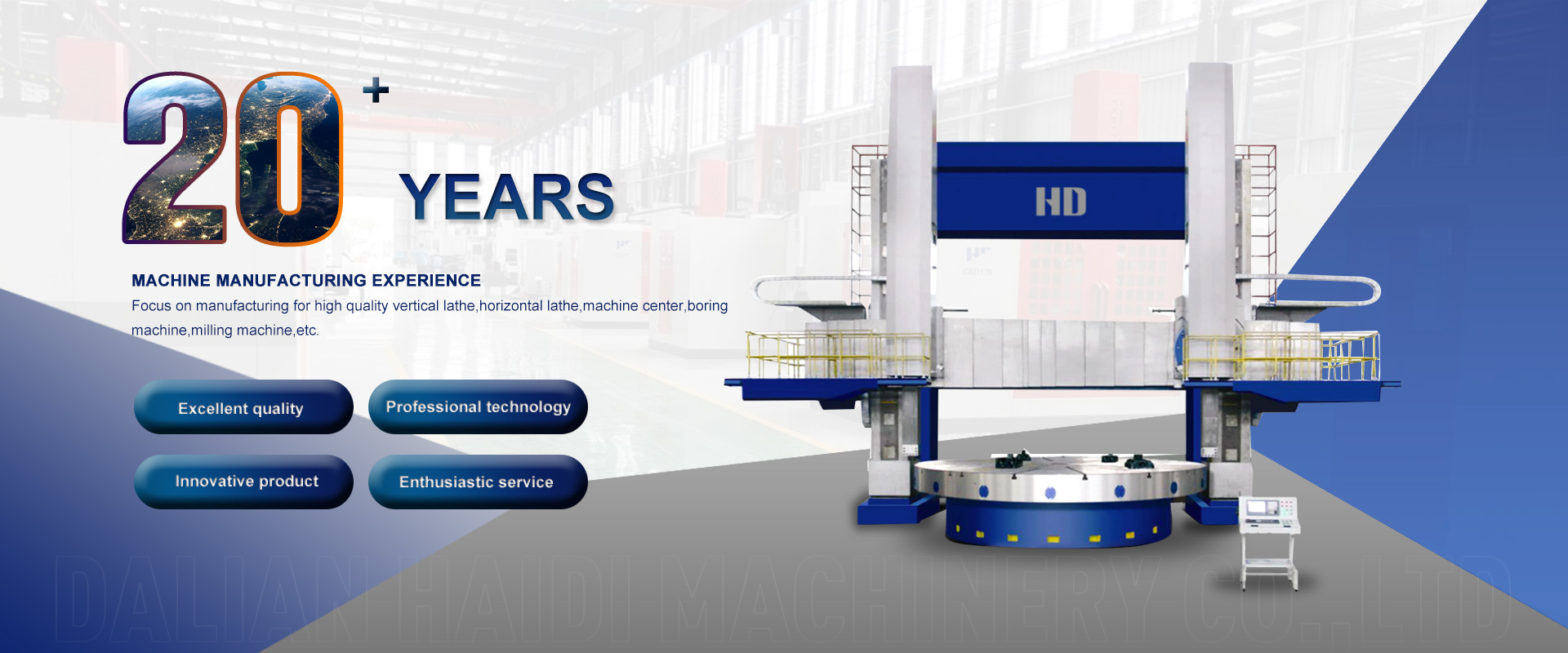
For any vertical lathe, precision begins with the bed. Unlike many machine tool assemblers that outsource castings, HAIDI Machine operates its own dedicated foundry – established in 1983 with an annual output exceeding 20,000 tons. This article explains why in‑house casting and proper thermal aging are critical for long‑term accuracy, and how HAIDI‘s integrated manufacturing approach – from raw casting to final CNC integration – delivers vertical lathes that maintain their geometric precision even after a decade of heavy production. Available in single‑column (CK51 series) and double‑column (CK52 series) configurations, HAIDI vertical lathes are built for the demands of energy, shipbuilding, mining, and general heavy engineering.
Precision starts with the bed – why casting quality matters
Every experienced machine tool engineer knows that the accuracy of a vertical lathe begins with its bed. A machine‘s cast iron structure is the foundation upon which all other components – guideways, spindle, ball screws, and tool posts – depend. If the bed distorts or “creeps” over time, no amount of precision bearing or CNC control can compensate.
This is why HAIDI Machine operates its own dedicated foundry. Established in 1983, the foundry has over four decades of experience in producing large, complex castings for heavy machine tools. With an annual output exceeding 20,000 tons, it is one of the largest machine tool casting facilities in southern Liaoning.
Resin sand casting with thermal aging
Unlike many assemblers that purchase castings from third‑party suppliers – often with inconsistent quality and unknown stress‑relief histories – HAIDI controls the entire casting process from start to finish. The company uses the resin sand casting process, which produces castings with excellent surface finish and dimensional accuracy.
After casting, every major structural component – bed, columns, crossrail, and ram – undergoes rigorous thermal aging (stress relief) to eliminate internal residual stresses. This two‑stage process (artificial aging followed by vibration treatment) ensures that the bed does not distort over decades of continuous operation. Guideways are induction‑hardened to HRC 50 or above, ground to precision tolerances, and hand‑scraped for optimal contact.
What this means for your production
The combination of in‑house casting, proper thermal aging, and precision machining translates directly into measurable benefits:
-
Long‑term geometric stability – The bed retains its factory‑set geometry for decades, not years.
-
Consistent accuracy under heavy loads – The rigid, stress‑relieved structure resists bending and torsion during heavy roughing cuts.
-
Superior vibration damping – High‑quality cast iron absorbs cutting vibrations, improving surface finish and extending tool life.
-
Predictable service life – A properly stress‑relieved bed eliminates the “surprise” of accuracy drift after 5–7 years.
From casting to CNC – an integrated approach
HAIDI Machine is not just a casting foundry – it is a complete machine tool manufacturer. The company develops, researches, and produces a full range of equipment:
-
Single‑column vertical lathes (CK51 series) – for workpieces up to 2,600 mm diameter and 15 tons
-
Double‑column vertical lathes (CK52 series) – for workpieces from 2,500 mm to over 12,000 mm diameter and up to 200+ tons
-
Slant‑bed CNC lathes – for high‑speed, high‑precision turning of shafts and disc‑type parts
-
Horizontal lathes, radial drilling machines, slotting machines, boring‑milling machines, and machining centers
Every machine is equipped with Siemens 828D CNC (or optional Fanuc and GSK systems), uses premium electrical components (Schneider), and features independent electrical cabinets with air conditioning for thermal stability.
Why in‑house casting gives HAIDI an edge
Most machine tool assemblers do not cast their own iron. They buy castings from foundries, machine them, and assemble the final product. This introduces variables: inconsistent material quality, unknown stress‑relief histories, and limited control over the casting process.
HAIDI‘s integrated approach eliminates these variables. By controlling the casting process from raw materials through thermal aging to final machining, HAIDI ensures that every bed that leaves the factory meets the same rigorous standards. This is not a matter of convenience – it is a matter of reliability.
Who benefits from HAIDI‘s integrated manufacturing?
-
Energy industry – Wind turbine bearing rings, hydroelectric components, and power generation flanges
-
Shipbuilding – Propeller hubs, large shaft components, and marine equipment
-
Mining and heavy equipment – Gear blanks, mill shells, and structural components
-
General engineering – Valve bodies, pump housings, and custom heavy parts
HAIDI vertical lathes are designed for workshops where accuracy is not optional and downtime is not acceptable.
➡️ To discuss your specific requirements – whether single‑column or double‑column, 1.25 meters or 12+ meters – or to request a detailed quotation, click here to contact our sales engineering team.
Related news
2026-09-22

HAIDI MACHINERY
CONTACT US
Dalian Haidi Machinery Co.,Ltd
Address: No.9 Haifu road,Dalian bonded area,China
Telephone/whatsapp:+8618841132208
E-mail:info@haidimachine.com
Website:www.haidimachine.com
QUICK LINKS