

22
2026
-
06
New vs. Used Vertical Lathes – Why a Brand‑New HAIDI Machine Often Costs Less Than You Think
When shopping for a vertical lathe, many shop owners are tempted by the lower price tag of used equipment. But the purchase price is only the beginning. This article breaks down the real costs of buying a used vertical lathe – hidden wear, unplanned downtime, repair bills, and lost productivity – and compares them to the total cost of owning a new HAIDI vertical lathe. With competitive pricing across the full range – from smaller single‑column models to extra‑large double‑column machines handling diameters over 12 meters – HAIDI offers a smarter, more predictable investment for shops that need reliable, long‑term turning capacity.
The used vertical lathe “bargain” – what you don’t see
The used machine tool market is full of tempting deals. A five‑ or ten‑year‑old single‑column or double‑column vertical lathe from a reputable brand might be offered at 30–60% of its original price. For a shop with a tight budget, that looks like a steal.
But here is what experienced buyers know: the purchase price is just the beginning.
Hidden wear on critical components
Vertical lathes are massive, complex machines. Spindles, worktable guideways, ball screws, drives, and electronic systems all degrade with use. A used vertical lathe may look clean on the outside and still hide serious wear that only shows up under real cutting conditions.
-
Spindle bearings – Replacing a worn spindle bearing set on a vertical lathe can cost anywhere from tens of thousands to over a hundred thousand dollars, depending on the machine size. On larger machines, spindle bearings are custom‑ordered and can take months to manufacture.
-
Worktable guideways – Hydrostatic guideways depend on precise oil film thickness. If the table or base has wear, the oil film becomes uneven, affecting accuracy. Re‑grinding and scraping a large worktable on a 6‑meter or 10‑meter machine is a specialised job that requires large‑scale grinding equipment, with costs to match.
-
Ball screws and drives – Worn ball screws cause positioning errors. Replacing them on a large vertical lathe is expensive and time‑consuming.
-
Hydraulic systems – Older hydrostatic systems often have worn pumps, clogged filters, and leaking seals. A full hydraulic system overhaul on a large double‑column machine can run into tens of thousands of dollars.
No history, no guarantee
Unless you are buying from a trusted source with full maintenance records, you are taking a gamble. Many used vertical lathes come from dealers who have no idea about the machine‘s actual history – how many hours it ran, whether it suffered a crash, or what was repaired. Some machines are cosmetically “refurbished” with fresh paint that hides serious underlying issues.
Lost production time
Perhaps the most expensive hidden cost is downtime. When a used vertical lathe breaks down – and it will – you are not just paying for repairs. You are losing revenue from jobs that cannot run. If a critical component fails and the replacement takes weeks or months to arrive, that could mean tens or hundreds of thousands of dollars in lost business, not to mention the damage to customer relationships.
Why a new HAIDI vertical lathe is a smarter investment
Now let us look at the other side of the equation.
Competitive pricing that challenges the used market across all sizes
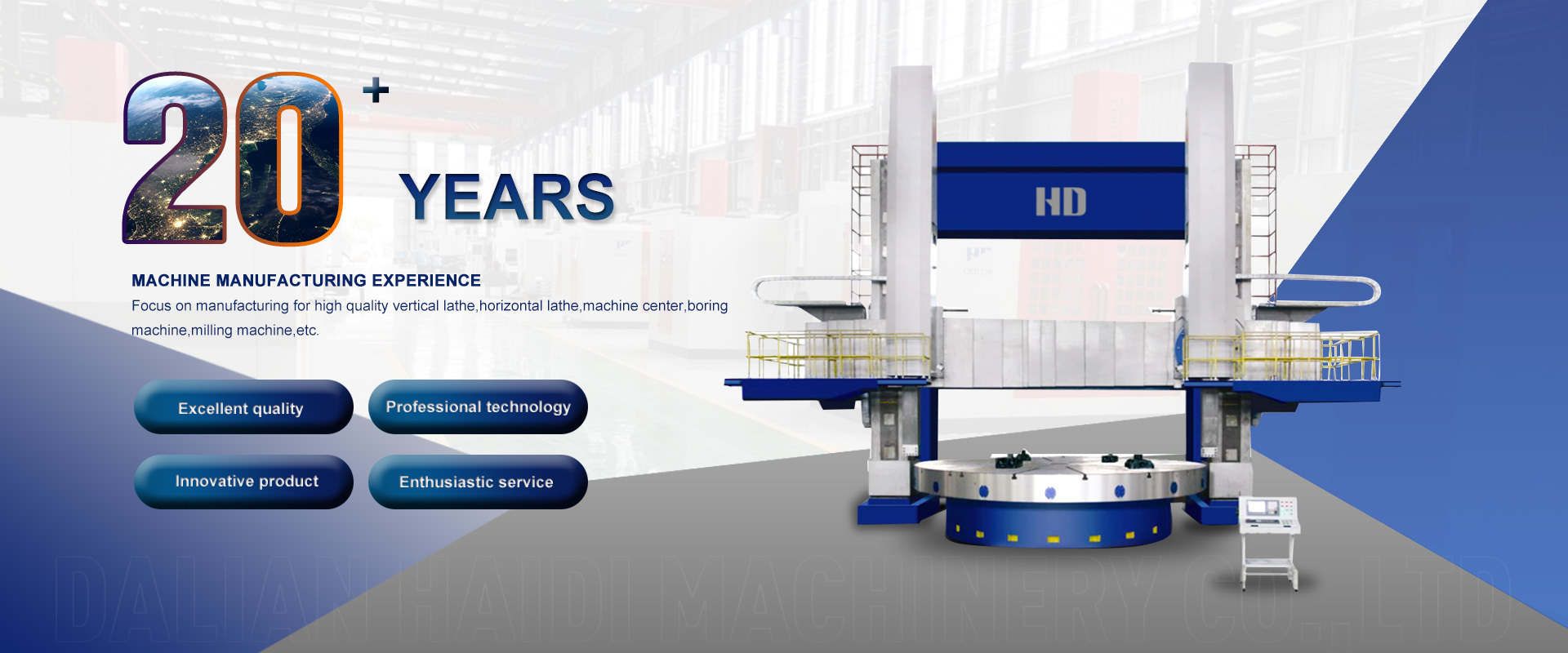
HAIDI Machine offers a complete range of single‑column and double‑column vertical lathes – from smaller models handling day‑to‑day production to extra‑large double‑column machines capable of turning workpieces over 12 meters in diameter. The pricing across this full spectrum is surprisingly accessible.
In many cases, the price difference between a used vertical lathe of questionable condition and a brand‑new HAIDI vertical lathe with a full warranty is far smaller than most buyers expect – especially when you compare new HAIDI pricing against used premium‑brand machines in the 5‑meter, 8‑meter, or 10‑meter classes.
When you factor in the cost of repairs, retrofits, and downtime that a used machine will inevitably require, the new machine often becomes the more affordable option over a three‑ to five‑year horizon.
Full warranty and factory support
Every new HAIDI vertical lathe comes with a standard warranty and direct factory support. If something goes wrong, you are not left searching for a technician who knows how to work on a machine with no documentation. HAIDI provides complete documentation – operation manuals, maintenance guides, electrical diagrams, and quality certificates – with every machine.
Modern technology, better accuracy and efficiency
New HAIDI vertical lathes incorporate the latest Siemens CNC controls, more efficient spindle drives, and improved thermal management. Hydrostatic worktable guideways are factory‑set and verified. The result is better surface finishes, faster cycle times, and lower energy consumption. Older machines simply cannot match the productivity of a modern vertical turning platform.
Long‑term accuracy and reliability
A new vertical lathe‘s geometry is factory‑set and verified. Its guideways are unworn. Its spindle bearings are fresh. Its ball screws are pre‑tensioned and accurate. For shops that need consistent, repeatable accuracy – whether for flanges, bearing rings, brake drums, or valve bodies – a new machine delivers that from day one and keeps delivering it for years.
Peace of mind
Perhaps the most underrated benefit of buying a new vertical lathe is peace of mind. You know exactly what you are getting. There are no surprises. No wondering whether that “great deal” is going to turn into a money pit. Just a machine that works, day in and day out.
Real‑world math – new vs. used vertical lathe
Let us put some rough numbers on this.
A used 4,000 mm double‑column vertical lathe might be advertised at 40–50% of the price of a new equivalent. That sounds like a saving of hundreds of thousands of dollars. But what if that used machine needs:
-
Spindle bearing replacement: tens of thousands of dollars
-
Worktable guideway re‑grinding and scraping: similarly expensive
-
Ball screw refurbishment or replacement: thousands to tens of thousands
-
Hydraulic system overhaul: thousands to tens of thousands
-
Lost production during repairs: easily six figures in revenue
Add those up, and the “saving” quickly evaporates. Worse, even after spending all that money, you still have a used machine with a worn structure and no warranty.
On a 10‑meter or 12‑meter machine, these numbers scale even further – spindle bearing replacement alone can exceed $100,000, and guideway re‑grinding may require specialised facilities charging six‑figure sums.
By contrast, a new HAIDI vertical lathe comes ready to run. No repairs. No retrofits. No guessing. And it is backed by a warranty and factory support.
Which shops benefit most from buying new?
-
Shops that need consistent, repeatable accuracy for production runs of flanges, bearing rings, or valve bodies
-
Factories upgrading from manual or older vertical lathes
-
Job shops that cannot afford unplanned downtime
-
Owners who prefer a predictable cost structure over gambling on used equipment
-
Any shop planning to keep the machine for 10+ years
Making the right choice for your shop
The decision between new and used is never just about the initial price tag. It is about total cost of ownership: purchase price, plus repairs, plus lost production, plus the value of your time and peace of mind.
When you add it all up, a brand‑new HAIDI vertical lathe often turns out to be the smarter investment – not because it is flashy, but because it works, reliably and profitably, from the day it is installed.
➡️ To compare new HAIDI vertical lathe pricing against used alternatives for your specific requirements – from smaller single‑column models to 12‑meter double‑column machines, click here to speak with our sales engineering team.
Related news

HAIDI MACHINERY
CONTACT US
Dalian Haidi Machinery Co.,Ltd
Address: No.9 Haifu road,Dalian bonded area,China
Telephone/whatsapp:+8618841132208
E-mail:info@haidimachine.com
Website:www.haidimachine.com
QUICK LINKS