

24
2026
-
06
Single-Column vs. Double-Column Vertical Lathes – A Practical Selection Guide for Flanges, Rings, and Large Components
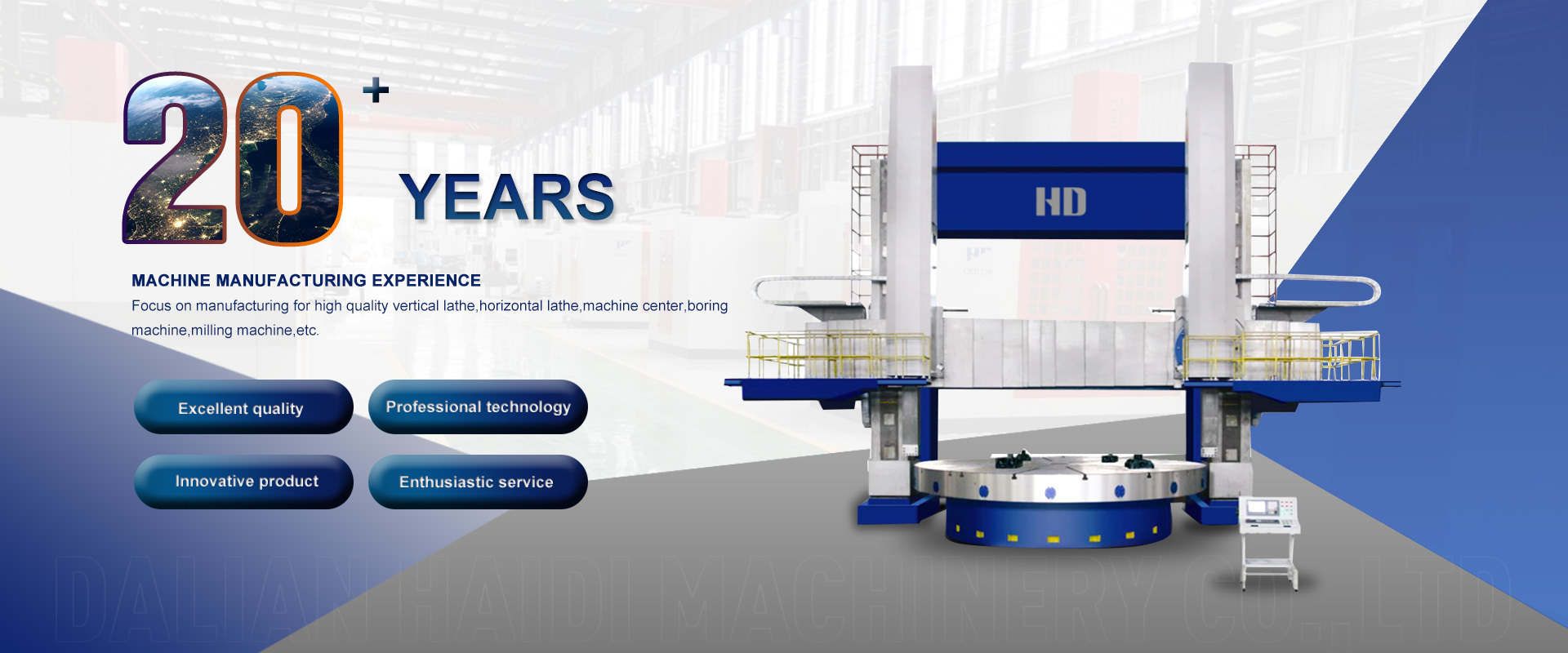
When designing a machining process for large-diameter workpieces – flanges, bearing rings, turbine components – the first decision is machine architecture. Should you choose a compact, agile single-column vertical lathe or a massive, ultra-rigid double-column machine? This article, prepared by HAIDI Machine engineers, provides a practical selection guide based on workpiece weight and required accuracy. It covers the CK51 single-column series (ideal for parts up to 2,600 mm and 5–10 tons) and the CK52 double-column series (designed for diameters from 2,500 mm to over 12,000 mm and loads up to 150+ tons), helping you make an informed, cost-effective investment.
The first question in large-part machining: one column or two?
When you are planning the production process for large flanges, bearing rings, turbine housings, or other heavy components, the very first technical decision is the machine architecture. Should you invest in a compact, flexible single-column vertical lathe, or do you need the massive rigidity of a double-column giant?
There is no single “right” answer – only the right answer for your specific parts, batch sizes, and budget. This guide from HAIDI Machine engineers breaks down the key differences between the CK51 single-column series and the CK52 double-column series, helping you match the machine to your actual production needs.
Single-column vertical lathes – the CK51 series: speed and economy
The single-column design is the natural choice for small to medium-diameter workpieces, typically ranging from 1,250 mm to 2,600 mm. In this configuration, the entire tool post assembly is mounted on a single massive vertical column.
Key advantages of the single-column architecture:
-
Higher dynamics – The worktable accelerates faster, reducing cycle times for small and medium batch production.
-
Compact footprint – A single-column machine occupies significantly less shop floor space – typically about 30% less than a double-column machine of similar capacity. For workshops with limited space, this is a real advantage.
-
Better price-to-performance ratio – All else being equal, a single-column vertical lathe is approximately 20–35% less expensive than a double-column equivalent. In the same price range, high-end single-column machines can actually achieve better roundness accuracy (as low as 0.005 mm) because their moving components have less mass.
Who is the CK51 series for?
Single-column vertical lathes are ideal for manufacturers producing railway wheels, hubs, small-to-medium diameter flanges, valve bodies, and gear blanks weighing up to 5–10 tons. The CK51 series from HAIDI Machine – including models such as the CK5112, CK5116, and C5126 – covers turning diameters from 1,250 mm to 2,600 mm, with table loads from 3.2 to 15 tons. These machines are equipped with Siemens CNC controls, hydrostatic worktable guideways, and high-torque spindle motors, delivering reliable performance for daily production.
Why single-column might be the right choice for you
If 90% of your parts have diameters under 2,500 mm and weights under 10 tons, a single-column vertical lathe is usually the most cost-effective solution. You get the rigidity you need for most applications, without paying for extra capacity you will rarely use. The compact footprint also means easier installation and lower foundation costs.
➡️ To discuss whether the CK51 single-column series fits your part mix – flanges, hubs, valve bodies, or gear blanks – click here to speak with our sales engineering team.
Related news

HAIDI MACHINERY
CONTACT US
Dalian Haidi Machinery Co.,Ltd
Address: No.9 Haifu road,Dalian bonded area,China
Telephone/whatsapp:+8618841132208
E-mail:info@haidimachine.com
Website:www.haidimachine.com
QUICK LINKS